Barkana Font Review: A Timeless Script for Branding
I was staring at a blank brand board for a local bakery refresh last Tuesday, needing something that felt established but not stiff. The client wanted a vibe that echoed old-school signage without looking like a cliché diner logo. That's when I pulled Barkana out of my Fonts folder to see if this Script Handwritten typeface could carry the weight of a full identity system. After testing it across logo drafts, packaging mockups, and social media layouts, I can say this stylish script font with a timeless classic touch is exactly what modern branding often lacks: a strong yet friendly personality that doesn't sacrifice legibility.
Using Barkana for Vintage Logo Design and Signage
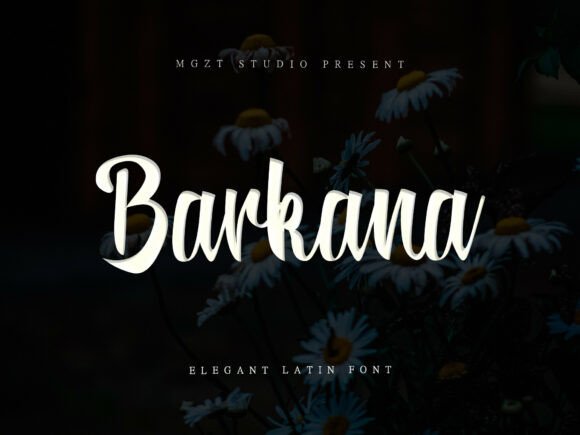
When you first load Barkana into your design software, the curves immediately remind you of hand-painted shop signs from the mid-20th century. As a Script Handwritten display font, it excels in logo design where character matters more than uniformity. In my recent project, I used it as the primary logotype, and the thick-to-thin stroke contrast gave it enough presence to work on a storefront sign while maintaining an approachable feel. Unlike many decorative Fonts that crumble when scaled up, Barkana holds its structure beautifully, making it ideal for businesses that need their name to be the hero of the visual identity. It strikes that difficult balance between retro nostalgia and contemporary cleanliness, ensuring the brand feels heritage-rich rather than dated.
Applying Barkana to Packaging Design and Product Labels
Moving from the digital screen to physical mockups is where many typefaces fail, but Barkana translates surprisingly well to packaging design. I placed the font on a kraft paper coffee bag label to test its readability against a textured background. The open counters and distinct letterforms prevented the text from getting lost, which is a common issue with tighter script fonts. For product labels, especially in the artisanal food or handmade skincare niches, this Script Handwritten style adds a layer of perceived quality and care. It suggests that the product inside was crafted with attention, mirroring the deliberate strokes of the typeface itself. Whether you are designing a wine bottle label or a soap wrapper, Barkana provides that premium, boutique aesthetic that justifies a higher price point.
Pairing Barkana with Modern Typography Systems
No font exists in a vacuum, and finding the right support act for Barkana is crucial for a cohesive brand identity. Because this stylish script font has such a distinct personality, it pairs best with clean, neutral sans serif fonts for body copy and secondary information. In my brand board layout, I paired it with a geometric sans to create a dynamic tension; the organic flow of Barkana softened the rigid lines of the supporting text. This combination works exceptionally well for business cards and letterheads, where you need the logo to pop but the contact details to remain crisp and professional. Avoid pairing it with other decorative Fonts or overly ornate serifs, as this can create visual noise that dilutes the timeless classic touch Barkana offers. The goal is to let the script shine while the supporting typeface handles the heavy lifting of information hierarchy.
Optimizing Barkana for Social Media Graphics and Web Headers
In the digital realm, Barkana proves to be a versatile asset for social media graphics and website headers. I tested it on an Instagram story template promoting a seasonal sale, and the font's friendly personality drove immediate engagement. It feels personal, almost like a note written by the business owner, which helps build a connection with the audience. For web design, it serves perfectly as a headline font for hero sections or call-to-action banners. However, it is important to remember that as a display font, it should be used sparingly online. Stick to short phrases and headlines to ensure fast loading times and maximum impact. When used correctly in digital formats, this Script Handwritten typeface breaks the monotony of standard web typography, giving your site a unique voice that stands out in a crowded feed.
Limitations and Best Practices for Commercial Use
While Barkana is a powerful tool, it isn't suitable for every scenario. You should avoid using this Script Handwritten font for long blocks of body text or small print sizes, such as ingredients lists or legal disclaimers, where readability is paramount. Its strength lies in being a display font for logos, headlines, and short accents. Before finalizing any client work, always test the font at various sizes to ensure the ligatures and swashes don't clash or become illegible. Additionally, if you are incorporating Barkana into commercial projects like merchandise, templates, or large-scale advertising, double-check the commercial font licensing terms. Understanding the specific rights regarding webfont availability and embedding is essential to protect both you and your client. By respecting these limitations and focusing on its strengths in branding and packaging, you can leverage Barkana to create memorable, high-quality design assets.